5 Proven Eurovision Qualifier Production Lessons
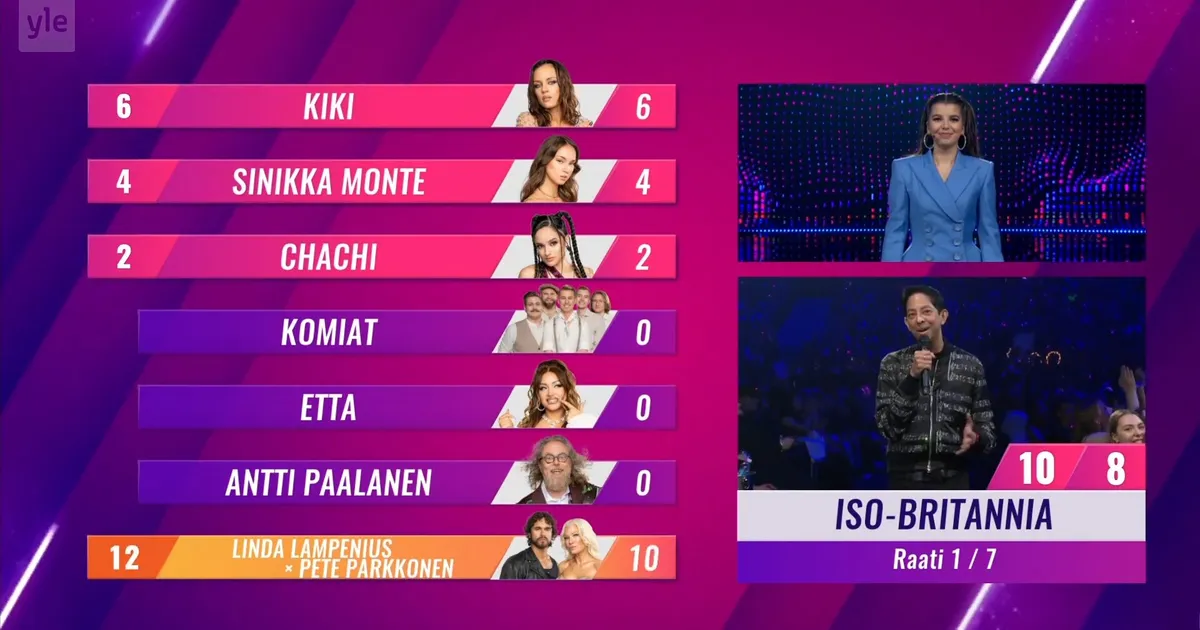
Eurovision qualifier production is one of the clearest real-world tests of how modern entertainment systems perform under pressure. National broadcasts combine live voting, multiple performers, complex graphics and tight timing. When these elements collide, the difference between smooth execution and chaos often comes down to how well editorial planning, rundowns and live execution tools stay connected.
This article about live entertainment rundowns is part of a six-part series on modern entertainment production, published alongside a Nordic broadcaster’s sixth season of producing the 2026 Eurovision qualifier on Dramatify.
Scale changes the nature of production
Weekly entertainment programmes already demand careful coordination. Eurovision qualifier productions operate at a different level entirely.
Multiple artists appear on stage. Voting systems must remain accurate. Graphics display real-time information. Presenters follow strict timing windows. At the same time, the show must remain engaging for audiences watching both on television and online.
When productions reach this level of complexity, manual coordination becomes fragile. Small mistakes in scripts, graphics or cues quickly become visible on air. This is why Eurovision qualifier production often becomes a proving ground for production systems.
Why Eurovision qualifier production becomes a systems test
Large live entertainment shows reveal weaknesses that smaller productions may hide. Disconnected documents, manual copy-paste workflows and parallel communication channels introduce unnecessary risk. As productions scale, these small inefficiencies multiply.
Modern broadcast teams increasingly rely on integrated production platforms to manage planning and execution from a single editorial structure. For example, organisations such as Yle, Finland’s national public broadcaster, produce national entertainment broadcasts that combine stage production, live voting and multi-platform distribution.
In this environment, Eurovision qualifier production becomes more than a creative event. It becomes a systems challenge.
Integrated rundowns in Eurovision qualifier production
The centre of most entertainment broadcasts is the rundown. In Eurovision qualifier production, rundowns define the structure of the entire programme: performances, presenter segments, voting sequences and transitions.
Modern rundown systems no longer act as static documents. They function as live editorial frameworks that connect planning, scheduling, scripts, timing, graphics, and cues, optionally also team management, budgeting and the creative departments.
With integrated entertainment rundowns, production teams can automatically generate cue cards, update scripts without duplication, and ensure presenters receive the correct text even when the running order changes. These capabilities become essential during Eurovision qualifier production, where timing changes and unexpected developments are common.
Execution tools and graphics integration
Graphics are another critical component of large entertainment broadcasts. Song titles, artist names, scores and voting updates must appear accurately on screen. Manual re-entry of this information introduces avoidable errors.
Modern broadcast systems integrate graphics tools such as SPX Graphics, allowing editorial data written during planning to flow directly into graphics playout. This integration reduces copy-paste errors and ensures graphics remain aligned with the rundown.
Live execution can also involve cueing platforms such as CuePilot, where the director not only manages shots, but can also fire off graphics, lighting and pyro. When these systems share the same editorial structure, such as Dramatify, Eurovision qualifier production becomes significantly easier to control.
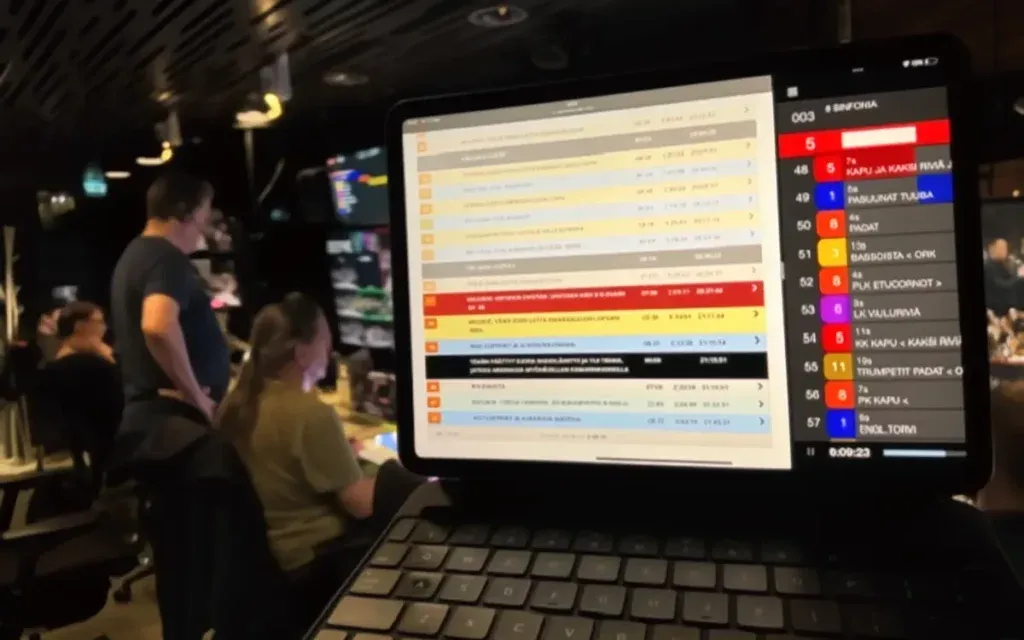
An example of Dramatify’s live entertainment rundowns and CuePilot’s shot list vision mixer in a live broadcast side-by-side.
What broadcasters learn from a Eurovision qualifier production
Not every entertainment programme operates at the Eurovision scale. However, Eurovision qualifier production reveals lessons that apply to many other formats.
Talk shows, talent competitions and music broadcasts all share similar requirements: tight timing, graphics coordination and scripted presenter segments. When these productions adopt integrated systems rather than disconnected documents, coordination improves dramatically.
The key insight from Eurovision qualifier production is simple: complexity requires connected tools. Planning, rundowns, scripts, graphics and live execution must operate as parts of the same workflow.
Key insights from Eurovision qualifier production
Eurovision qualifier production shows how demanding live entertainment can become when scale increases. By connecting editorial planning, integrated rundowns and execution tools, broadcasters reduce risk while maintaining creative flexibility.
For production teams, the lesson is clear: systems that work under Eurovision-level pressure can support almost any entertainment broadcast.
Next: Book a demo or see how the workflow fits into your productions.
Other articles in the series
 1
113 Feb 2026
AI Show Development That Drives Commission Wins
 2
217 Feb 2026
Entertainment Production Workflows Beyond Spreadsheets
 3
324 Feb 2026
Why Digital Entertainment Rundowns Don’t Break Live
 4
43 Mar 2026
The Innovative Shift in Live Entertainment Rundowns
 5
56 Mar 2026
5 Proven Eurovision Qualifier Production Lessons
Reading now 6
613 Mar 2026
5 Powerful Entertainment Rundown Templates That Scale Shows
 7
715 Apr 2026
Proven TV Format Production That Cuts Costs at Scale
 8
825 Apr 2026
The Powerful Talent Show Production Workflow Behind Hit Formats
 9
99 Jul 2026
Inside Reality Show Production Workflows