How Broadcasters Are Using Dramatify for FIFA World Cup 2026 Coverage
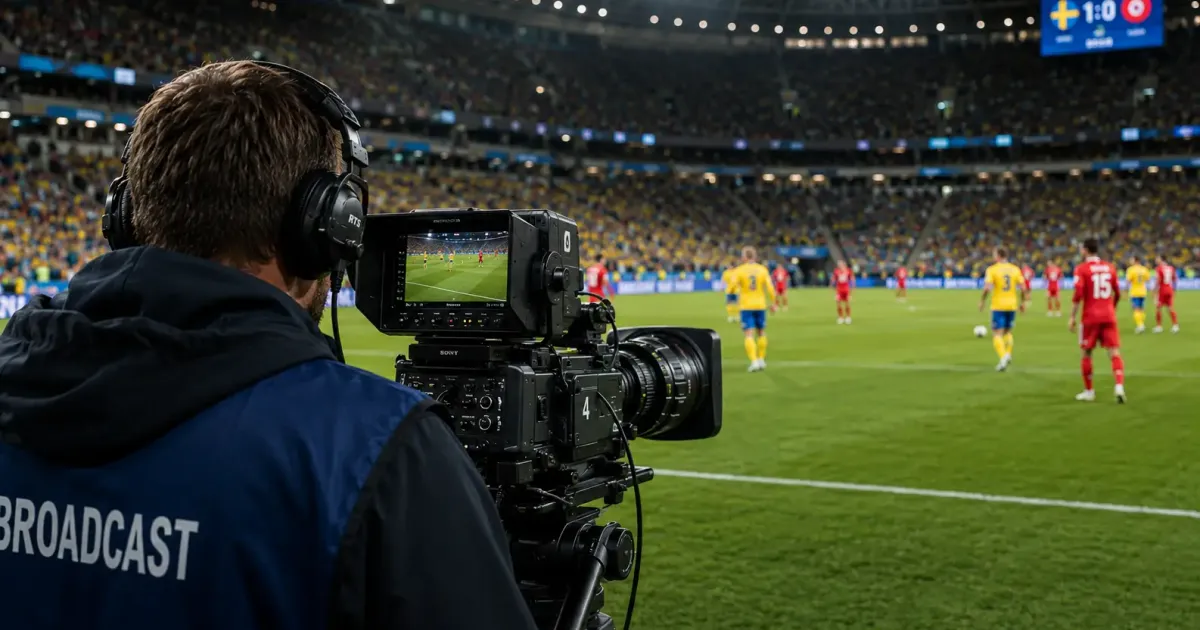
Dramatify Broadcasting Software Helps World Cup Broadcasters Manage the Largest Tournament in Football History
Inside the FIFA World Cup 2026 Broadcast Operations: Running from 11 June to 19 July across the United States, Mexico, and Canada, the FIFA World Cup 2026 is the largest tournament in football history.
With 48 national teams and 104 matches, broadcasters face an operational challenge on a scale the industry has never experienced. Production teams must coordinate crews, facilities, content, schedules and live broadcasts across multiple countries, cities, and time zones while maintaining the reliability viewers expect from the world’s biggest sporting event.

For some broadcasters covering the tournament, that challenge is being managed with Dramatify. While viewers see the action on the pitch, production teams are working behind the scenes to coordinate thousands of moving parts. Schedules change. Travel plans shift. Editorial priorities evolve. Live matches rarely run exactly to plan. Every adjustment must be communicated across production, editorial and technical teams in real time.
As the scale of sports broadcasting continues to grow, many broadcasters are replacing fragmented workflows built around spreadsheets, email chains and disconnected systems with cloud-based production environments designed specifically for live television.
FIFA World Cup 2026 Broadcast Operation Planning at Unprecedented Scale
The 2026 tournament has introduced a level of operational complexity rarely seen in live television. Production teams are not simply covering matches. They are managing studios, commentary teams, reporters, producers, editors, graphics operators, technical directors and social media teams across a tournament lasting more than a month.
Historically, many sports productions have relied heavily on spreadsheets for planning and coordination. While effective for smaller productions, spreadsheets become increasingly difficult to maintain when dozens of departments need access to constantly changing information.
The result is what some production managers informally describe as “spreadsheet drift”, where different versions of schedules, call sheets and running orders begin to diverge.
In a live sports environment, such as inside FIFA World Cup 2026 Broadcast Operations, those inconsistencies can quickly create operational risks. A late schedule change, an extended pre-match segment, or unexpected developments during a game can require immediate updates across the editorial, technical, and production teams. When information lives in separate documents, the risk of miscommunication increases.
For broadcasters covering the World Cup, maintaining a single source of truth has become increasingly important. The challenge is explored in greater detail in our article on sports production workflows.
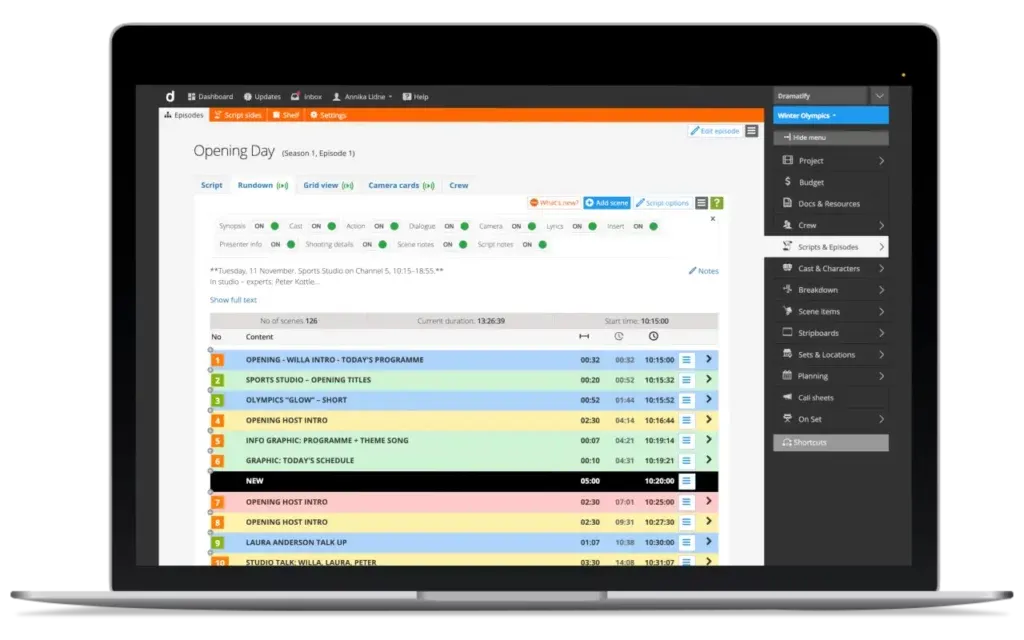
One view of a sample sports rundown in Dramatify
How Broadcasters Are Planning 2026 FIFA World Cup Operations
Long before the first whistle, broadcasters are planning far more than football matches. Production managers must schedule facilities, presenters, commentators, reporters, technical staff and production crews while coordinating travel, accommodation and studio operations across multiple locations.
For some broadcasters, Dramatify broadcasting software has become part of this planning process. Teams use the platform for crew and contributor management, production planning, location planning, scheduling and operational coordination.
As match coverage approaches, editorial teams move into content planning using Dramatify’s Shelf, where producers, researchers and journalists can pre-plan game schedules, rundown content, organise stories, match notes, graphics ideas, interview material and supporting content.
That preparation becomes increasingly important during a tournament where multiple matches, studio programmes and digital outputs often run simultaneously.
A Live Sports Production Management Platform from Planning to Broadcast
As coverage moves closer to air, production teams shift from planning to execution. Broadcasters using Dramatify during the tournament are managing multiple stages of the production workflow within the same environment, helping ensure that editorial, production and technical teams remain aligned.
Unlike static documents, digital production workspaces provide live visibility across the entire production team. Changes can be made centrally and become immediately available to everyone working on the production. For major sports events where timing can change minute by minute, this shared operational picture becomes particularly valuable.
The same workflow also supports detailed production daily schedules and semi-automated call sheets for large-scale sports events, helping production teams distribute updates more efficiently while reducing manual administration.
Teams planning major sporting events can also explore how Olympic-tested sports production planning software helps coordinate complex productions across multiple venues and departments.
FIFA World Cup Multi-Camera Live Rundowns Keep Teams Aligned
The same environment is used for multi-camera live rundown management, allowing production teams to coordinate scripts, timing, graphics, presenter information and production cues from a single workspace.
For some broadcasters covering the tournament, multi-camera live rundowns are helping keep production teams synchronised across venues, studios and remote production hubs. This becomes particularly valuable when matches run beyond their expected schedule or editorial priorities change during a live broadcast.
Because everyone works from the same rundown, producers, presenters, graphics operators and technical teams remain aligned as updates occur. For broadcasters operating across multiple venues and production hubs, digital rundowns reduce the risk of operational drift and help ensure that execution stays aligned with planning.
Our article on sports production rundowns explores why many broadcasters are replacing spreadsheet-based running orders with collaborative digital rundown systems that support modern multi-camera productions.
Remote Production Tools for Sports Broadcasting Across Three Countries
The FIFA World Cup 2026 Broadcast Operations also highlights another industry trend: the continued growth of remote production. Rather than deploying every technical and editorial resource to individual venues, many broadcasters now centralise significant parts of their operations within production hubs.
Remote production tools for sports broadcasting play a critical role in enabling this approach. Production managers, producers, editors and technical teams can collaborate regardless of location while maintaining access to the same schedules, rundowns, production notes and operational information.
For broadcasters covering matches across North America, this flexibility has become increasingly important. A producer working from a central production facility, an editor working remotely and a reporter located at a stadium can all operate from the same production environment. The result is a more agile workflow that adapts quickly to the realities of large-scale sports broadcasting.
Cloud-Based Sports Studio Scheduling Software and Integrated Workflows
Modern sports broadcasts rely on a growing number of specialised systems. Graphics platforms, teleprompters, archive systems and playout environments all play a role in delivering live coverage.
One reason broadcasters have adopted integrated production platforms is the ability to connect these systems within a broader workflow. Behind the scenes, broadcasters are increasingly relying on cloud-based sports studio scheduling software to coordinate presenters, commentators, production staff and technical teams across multiple locations.
During live productions, broadcasters use Dramatify rundowns alongside integrations with studio teleprompters, SPX Graphics, and other dedicated sports-broadcasting solutions, helping technical and editorial teams remain synchronised throughout the broadcast.
Once coverage is complete, rundown information and associated production metadata can be automatically transferred to VOD systems and archive workflows, reducing manual administration while preserving valuable production records for future use.
Broadcasters looking to modernise these workflows can learn more about Dramatify’s broadcasting software capabilities, including live rundowns, scheduling, planning and remote collaboration.
Beyond Sport: Live Entertainment Rundown and Timing Tools
Many of the workflow challenges seen during the FIFA World Cup 2026 broadcast operations also exist in entertainment, music and live event broadcasting. The same live entertainment rundown and timing tools used for complex television productions can help broadcasters manage opening ceremonies, studio shows, pre-match coverage and post-match analysis.
By bringing together planning, timing, graphics, and production information, broadcasters gain greater visibility across the entire production lifecycle.
Why the World Cup 2026 Reflects the Future of Sports Broadcasting
The FIFA World Cup broadcast operations often serves as a preview of where broadcast technology is heading. As audiences continue to consume content across traditional television, streaming services and social platforms, production workflows must become increasingly flexible.
Broadcasters need systems that support larger productions, distributed teams and faster decision-making without adding operational complexity. The shift toward cloud-based production management platforms is a direct response to those demands.
For some broadcasters covering the World Cup, Dramatify has become part of that infrastructure, supporting everything from production planning and crew coordination to content preparation, live rundowns, graphics integration and archive delivery.
The viewers see 90 minutes of football. Production teams see thousands of moving parts that need to stay synchronised.
The technology may remain invisible to audiences, but behind every match, studio programme and post-game analysis, production teams are relying on increasingly sophisticated workflows to keep one of the world’s largest live events on air.
As the tournament continues, one thing is becoming clear: managing the world’s biggest football competition now requires production tools designed for the scale and complexity of modern sports broadcasting.
For a broader look at how broadcasters are digitising planning, execution and delivery, see our article on sports production management software.
From World Cup Scale to Everyday Productions
While few productions operate at World Cup scale, many face similar challenges around planning, scheduling, content coordination and live execution. If you’d like to learn how broadcasters are addressing those challenges with Dramatify, we’d be happy to arrange a demonstration or an informal discussion. Contact us to schedule a time!
Frequently Asked Questions (FAQ)
How do sports broadcasters manage live production workflows for the 2026 World Cup?
Broadcasters use cloud-based production management platforms like Dramatify to coordinate teams across multiple host cities. These platforms centralise live multi-camera rundowns, digital call sheets, and script updates into a single cloud workspace. This ensures remote production hubs and stadium crews stay perfectly synchronised in real time.
What software is used for multi-camera live rundowns in sports broadcasting?
Modern sports networks rely on specialised systems like Dramatify’s broadcasting software to build and edit live rundowns. Unlike static spreadsheets, these digital tools update timing automatically across all devices. This helps master control rooms manage ad breaks, live graphic triggers, and multi-venue feeds without errors.
How does cloud-based production software improve remote sports broadcasting?
Cloud-based production software removes the need for physical, on-site meeting scheduling by providing a single source of truth accessible from anywhere. It automates crew logistics with instant updates, daily schedules synchronised with personal calendars, digital call sheets, and script changes sent directly to smartphones. This saves technical directors hours of manual work during complex, fast-moving live tournaments.
Why are traditional spreadsheets failing in modern live sports production?
Manual spreadsheets create “spreadsheet drift,” where different departments operate on outdated versions of a match schedule or rundown. In high-stakes live sports, unexpected game delays or overtime shifts require instant coordination. Digital production tools prevent on-air timing mistakes by updating the entire crew’s workspace simultaneously.